Format 📩 Instant PDF Download
🚸 Ages 6-12 Years Old
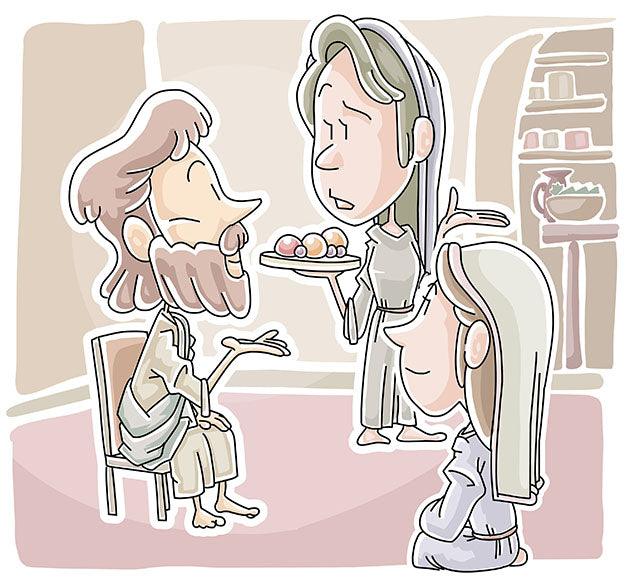
We can always trust that God will be faithful to His promises, but He doesn’t always act in the timing that we might hope for. Patience can be difficult, but we know God has a plan for our best interests. The story of Abraham, Sarah, and Isaac reminds us that God always works things for our benefit. This lesson uses a little laughter to recount Sarah’s reaction to the angelic announcement, and story elements to celebrate God’s goodness.
God keeps His promises and provides for us, no matter what. He loves and cares for us and will give us what we need, when we need it…even if it seems to take longer than we’d like. He promised Abraham descendants and later sent a son, Isaac. He also promised a Messiah and later sent HIS Son, Jesus!
Passage: Genesis 18:1-15; 21:1-7
Target Audience: Kindergarten-6th grade
Materials Needed: Construction paper; decorative supplies; glue; markers or crayons; tape; scissors; paper bags; paper plates; jokes; play food; toilet paper tubes; Bibles.
More Resources Online
For more free illustrations, visit Christian Clip Arts and Ministry-To-Children
Easy-Prep Bible Lesson
- Target Age: elementary school, adaptable for K-6th grades
- Translation: choose NIV, ESV or KJV
- Stand-alone lesson plan
- 17-pages of teaching material
- Instant digital download
- Flexible teaching plan for mixed age groups
- Ideal for Kids' Church or Sunday School (45-60 minutes teaching time)
Attention Keeping Activities
- Object Lesson with video demonstration
- Game Suggestions
- Easy To Follow Teaching Plan
- Craft Ideas with video demonstration
- Coloring Page
- Word Find Worksheet
- Memory Verse Poster
This passage is from the gospel of Matthew, and describes some of the things that Jesus did as He interacted with other people. The verses could easily be acted out or “mimed”, or you could have students take turns reading. Read the story out loud for younger students. Matthew 9:9-13 ESV As Jesus passed on from there, he saw a man called Matthew sitting at the tax booth, and he said to him, “Follow me.” And he rose and followed him. (10) And as Jesus reclined at table in the house, behold, many tax collectors and sinners came and were reclining with Jesus and his disciples. (11) And when the Pharisees saw this, they said to his disciples, “Why does your teacher eat with tax collectors and sinners?” (12) But when he heard it, he said, “Those who are well have no need of a physician, but those who are sick. (13) Go and learn what this means: ‘I desire mercy, and not sacrifice.’ For I came not to call the righteous, but sinners.” This first passage might not make a lot of sense right away, but is quite significant. The first thing that happens is that Jesus calls Matthew to follow Him as a disciple. Now, Jesus called several people to be His followers, but the interesting note about Matthew is that he had been a tax collector. Most people did not like tax collectors, who were known for being dishonest and cheating people out of money. Here Jesus was, knowingly and willingly asking one of those men to be a disciple. Matthew followed, though. Then, Jesus was hanging out with even more tax collectors, and in fact a number of sinners. The Pharisees, who were powerful in the Jewish church (and thought a lot of themselves), criticized this, asking Jesus why He would hang out with those sinful people. Jesus responded that He came for sinners. If everyone was already righteous and perfect, there would be no need for a Messiah! He was sent to seek the lost and care for those in spiritual sickness and need. As it turns out, that’s all of us, because we all sin! Perhaps the Pharisees expected the Savior to be a perfect rule-follower like they tried to be. Jesus didn’t match up to that preconceived notion, which is all for the best! Ask: What would you do if Jesus was coming to your house for dinner? How could you prepare for such a guest? Have you ever met someone who didn’t turn out as you first expected? Matthew 9:18-19 ESV While he was saying these things to them, behold, a ruler came in and knelt before him, saying, “My daughter has just died, but come and lay your hand on her, and she will live.” (19) And Jesus rose and followed him, with his disciples. This encounter shows an interesting contrast between the Pharisees and others. While the religious leaders are concerned with appearances and can’t understand why Jesus would be associated with sinful people, this ruler comes to Jesus with utter confidence that His touch will heal his daughter. He knows that Jesus is powerful and capable of anything, and trusts Him. Ask: What do you think Jesus will do next? Matthew 9:20-22 ESV And behold, a woman who had suffered from a discharge of blood for twelve years came up behind him and touched the fringe of his garment, (21) for she said to herself, “If I only touch his garment, I will be made well.” (22) Jesus turned, and seeing her he said, “Take heart, daughter; your faith has made you well.” And instantly the woman was made well. Here is another great example of faith, and another remarkable reaction of Jesus. We are not sure exactly what medical condition caused this woman’s suffering, but she had been bleeding for twelve years! Not only would this be uncomfortable and inconvenient, but it would render her ceremonially unclean. She wouldn’t have been able to go to church or be in certain places. Her condition was rather private, and she probably hoped that she could secretly and sneakily receive healing by touching Jesus. She was right, and she was healed instantly, but not with the anonymity she had expected. Jesus knew that she touched Him because He could feel power go out of Him at her healing. He publicly addressed her and commended her that her faith made her well, and not any sort of odd superstition or accident. In this case, Jesus did what doctors couldn’t do, and all it took was a touch of His robe. Ask: If you could have something fixed by touching Jesus, what do you think you would want? Matthew 9:23-26 ESV And when Jesus came to the ruler's house and saw the flute players and the crowd making a commotion, (24) he said, “Go away, for the girl is not dead but sleeping.” And they laughed at him. (25) But when the crowd had been put outside, he went in and took her by the hand, and the girl arose. (26) And the report of this went through all that district. Jesus arrives at His destination, the house of the girl who had died. Her father had already told Jesus that she was dead, and by the time He got there, the professional mourners were at work. In those days, people would hire others to cry for them when loved ones died. They may not have even known the deceased person, but could work up some tears when needed. It’s an interesting custom. When Jesus saw everyone gathered, He informed them that the girl was just sleeping. This drew scoffing laughter, because it seemed quite obvious that she was dead. However, Jesus went inside and took the girl by the hand, and she got up, alive! That probably quieted the laughter pretty quickly. She was alive and well, which did not go unnoticed or ignored among the people of the area. They were amazed at the power of someone who could bring the dead back to life! Little did they know what Jesus had for them later…His reputation was already spreading, though, and people knew that He was a miracle-worker. He didn’t always do things in ways or timings that people might have expected or anticipated. But He always worked to provide what was needed. Ask: Have you ever prayed for something and seen God answer it in a strange way? Remind students that Jesus is still in the healing business! He wants to help us and promises to provide us with all that we need. We might not always receive what we think we want, or in the way we think we want it. We might be confused and wonder if God heard our prayers at all…but He always does, and He will take care of us and be with us. Jesus has given us salvation through His death, the greatest gift we could ever ask for! He will always provide for us. Ask: How can you remember that Jesus is near and faithful? Close with prayer, thanking God for His power and presence, and asking for trust when things are not as we might expect.